
Ned Hallowell – ADHD 2.0 New Science and Essential Strategies for Thriving with Distraction
What if instead of thinking of ADHD as a deficit and a disorder, we saw it for what it really is? A way of being in the world which, with the right support, can be a wonderful way of being. At this year’s annual ADHD symposium, Dr. Hallowell shared recent research developments, including innovations that give a clearer understanding of the ADHD brain in action and draw on the latest science to provide parents, educators, and clinicians a plan for minimizing the downside and maximizing the benefits of ADHD at any age. Read more about Dr. Hallowell.
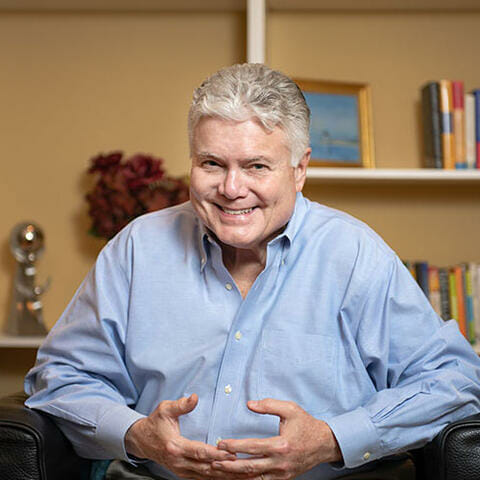 Ned Hallowell, M.D. is a board-certified child and adult psychiatrist and world authority on ADHD. He is a graduate of Harvard College and Tulane Medical School, and was a Harvard Medical School faculty member for 21 years. He is the Founder of The Hallowell ADHD Centers in Boston MetroWest, New York City, San Francisco, Palo Alto and Seattle. He has spent the past four decades helping thousands of adults and children live happy and productive lives through his strength-based approach to neurodiversity, and has ADHD and dyslexia himself. Dr Hallowell is a New York Times bestselling author and has written 20 books on multiple psychological topics. The groundbreaking Distraction series, which began with Driven to Distraction, co-authored with Dr John Ratey in 1994, sparked a revolution in understanding of ADHD. Dr Hallowell has been featured on 20/20, 60 Minutes, Oprah, PBS, CNN, The Today Show, Dateline, Good Morning America, The New York Times, USA Today, Newsweek, Time Magazine, the Los Angeles Times, the Boston Globe and many more. He is a regular columnist for ADDitude Magazine.