Dyslexia
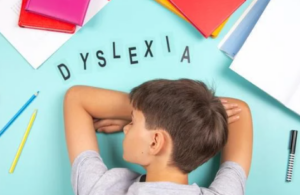 What is Dyslexia?
Reading is complex. It requires our brains to connect letters to sounds, put those sounds in the right order, and pull the words together into sentences and paragraphs we can read and comprehend.
People with dyslexia have trouble matching the letters they see on the page with the sounds those letters and combinations of letters make. And when they have trouble with that step, all the other steps are harder.
Dyslexic children and adults struggle to read fluently, spell words correctly and learn a second language, among other challenges. But these difficulties have no connection to their overall intelligence. In fact, dyslexia is an unexpected difficulty in reading in an individual who has the intelligence to be a much better reader. While people with dyslexia are slow readers, they often, paradoxically, are very fast and creative thinkers with strong reasoning abilities.
Dyslexia is also very common, affecting 20 percent of the population and representing 80– 90 percent of all those with learning disabilities. Scientific research shows differences in brain connectivity between dyslexic and typical reading children, providing a neurological basis for why reading fluently is a struggle for those with dyslexia.
Dyslexia can’t be “cured” – it is lifelong. But with the right supports, dyslexic individuals can become highly successful students and adults.
Source: https://dyslexia.yale.edu/dyslexia/what-is-dyslexia/
Symptoms of Dyslexia
- Difficulty spelling simple words
- Trouble learning the names of letters
- Problems telling apart letters with similar shapes
- Trouble rhyming
- Reluctance to read aloud in class
- Mispronouncing words
- Struggling to learn nursery rhymes or song lyrics that rhyme
Most children with dyslexia can succeed in school with tutoring or a specialized education program.
A comprehensive evaluation can be conducted by a trained school or outside specialist to determine if a student has dyslexia. The evaluation typically includes testing of language skills, such as receptive and expressive language skills, phonological skills, and a student’s ability to name letters and numbers.
How CBA Supports Students with Dyslexia
At CBA we offer services for dyslexic students through classroom learning and one-on-one instruction. Faculty will use programs based on the Orton-Gillingham including SPIRE, Wilson, Sounds in Syllables, Spellwell, and 95 Percent program for phonological skills and spelling.
Accommodations & Supports
- Read aloud
- Audio Online
- Voice to Text Technology
- Access to Reading Specialists
- Multi-sensory Instruction
- Ability Verbal Responses
Individualization is key to supporting our students’ success at CBA. Each child has an Individualized Instructional Plan (IIP) based on her or his strengths and challenges. The student’s learning style is factored into the development of the IIP, as well as her or his cognitive and social skill levels. The IIP is a living document, updated whenever the student’s needs change.
Ultimately, it is the educators who bring the student’s IIP to life. Highly skilled teachers with empathy and understanding of their students’ needs and motivations provide our students with just the right level of support. At the same time, our teachers maintain high academic standards. Maintaining that delicate balance requires sensitive and caring educators.
At CBA, we also individualize the curriculum for each student. Curriculum differentiation allows us to offer a program designed and delivered to address each student at their own level and in their own time. A wide variety of technological tools help us to maintain this personalized academic approach.
Every facet of our program encourages our students to reach their highest potential. For students who want to pursue a career in computer programming or multimedia, our technology labs feature the latest in web and graphic design, computer game design and animation, and networking and programming. If a student has a passion for the arts, our studio classes allow them to indulge and experiment in every discipline – drawing, painting, collage, textiles, ceramics, sculpture, mixed media, and more. And students who want to express themselves through music can start with music appreciation classes and continue on to our instrumental music program. Through all of these programs, we find ways to celebrate individual effort and promote cooperative achievement.
Our commitment to offering a well-rounded education includes the body as well as the mind. At Chesapeake Bay Academy we also understand that afterschool clubs help nurture a student’s sense of self-esteem and develop collaborative skills. Our students are encouraged to participate in our extracurricular programs, no matter their skill level.
From the moment you enter Chesapeake Bay Academy you’ll notice a difference between CBA and traditional school environments. We designed our 50,000-square-foot building to be a state-of-the-art haven for our students to learn and grow. Every aspect of our facility has been thoughtfully designed with our students’ specific needs in mind. From special non-flickering bulbs and oversized windows, to carpeted flooring and sound absorbing acoustical ceiling tile; from top to bottom our classrooms are comfortable and inviting spaces for our exceptional learners.
We invite you to join us for a tour and learn more about our programs, our faculty, our families and our facility. We know that you and your family will feel as comfortable and safe here as we do. It’s all part of the Chesapeake Bay Academy experience.