
Measuring Photosynthesis
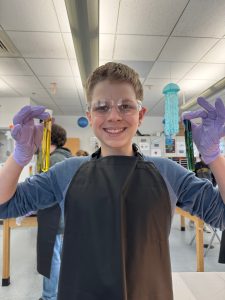 Mr. Snyder’s middle school Science students explored how plants make and use energy through a hands-on lab using bromothymol blue (BTB), a color-changing indicator of carbon dioxide levels.
Students used a water plant called Elodea and set up three test tubes: one placed in light, one covered in foil to block light, and one without a plant as a control. To begin, students introduced carbon dioxide into the solution, which turned the BTB yellow. As the experiment progressed, they observed how the presence of light allowed the Elodea to photosynthesize, reducing carbon dioxide and shifting the color back toward blue.
Along the way, students experienced real scientific problem-solving, adjusting BTB concentrations and refining their setup to get clear results. These moments provided valuable insight into how experimentation often involves trial, error, and revision.
The lab also connected to real-world environmental issues, including ocean acidification. Students were able to see how carbon dioxide affects pH levels firsthand, helping them better understand the impact on marine ecosystems.
By observing these changes in real time, students moved beyond theory—engaging directly with the processes of photosynthesis and scientific inquiry.


