
Shark Scientists in the Making
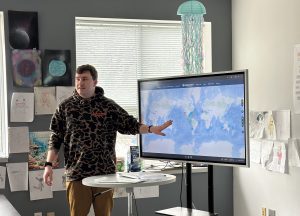 Mr. Synder’s middle school Science students took on the role of marine researchers through an engaging shark tracking project. After discussing the economic importance of sharks and how ocean ecosystems support entire communities, students explored how scientists study shark movement and why that data matters for conservation and coastal populations that rely on the ocean.
Using real-time research from OCEARCH, students learned how sharks are tagged and tracked over time. A highlight of the lesson was studying Webster, a 12-foot-2-inch great white shark first tagged in Nova Scotia on September 29. By examining tracking data from 2014 to today, students discovered that Webster has traveled over 2,000 miles, leading to thoughtful discussions about migration patterns, food sources, ocean temperatures, and shark behavior.
Each student then selected a different shark to track, compare, and analyze, allowing them to explore various species and migration routes. Throughout the project, students collaborated, shared their interests, and made predictions about where their sharks might travel next and why.
This hands-on investigation connected science to real-world research while strengthening students’ critical thinking, data analysis, and understanding of how sharks impact both marine ecosystems and human communities.


